What the Barrel Remembers: Secrets of Aging, Blending, and Tasting Barrel-Aged Beer — Part 2
In part 2 of What the Barrel Remembers, I contacted Paul Davidson, co-founder and head brewer at Elder Pine Brewing and Blending in Gaithersburg, Maryland.
This discussion was different from the one with Mike Tonesmeire in What the Barrel Remembers: Secrets of Aging, Blending, and Tasting Barrel-Aged Beer — Part 1, where we met at the brewery and discussed his experiences with barrel-aged beer. I posed a series of questions to Paul, and he graciously provided his thoughts. Only minor edits have been made to Paul’s responses to add clarification and readability.
So, meet Paul Davidson, co-founder and head brewer at Elder Pine Brewing and Blending in Gaithersburg, Maryland.
Introduction
How long have you been creating barrel-aged beers?
I’ve been handling barrels on a commercial level since I started brewing professionally back in 2013. I’ve been making barrel-aged beers at Elder Pine since our inception in 2018.
How did you get started working with barrels and blending?
My first time working with barrels was when I filled 60 A. Smith Bowman Bourbon barrels with Gonzo Imperial Porter shortly after I started working at Flying Dog in early 2013. The commercial-scale blending aspect came later, when I opened Elder Pine in 2018, though I had been blending small-batch mixed-fermentation beers at home since around 2012.
When it comes to barrel-aged beers, who have been your mentors or inspirations?
In the early days of my professional brewing career, I received a ton of insight from colleagues at places like Avery, New Belgium, Founders, and Goose Island. While those breweries aren’t small, local, or independently owned anymore, their barrel/foeder programs were/are incredibly impressive, and I learned a lot from them.
Sourcing Barrels
What kind of barrels do you use other than bourbon barrels?
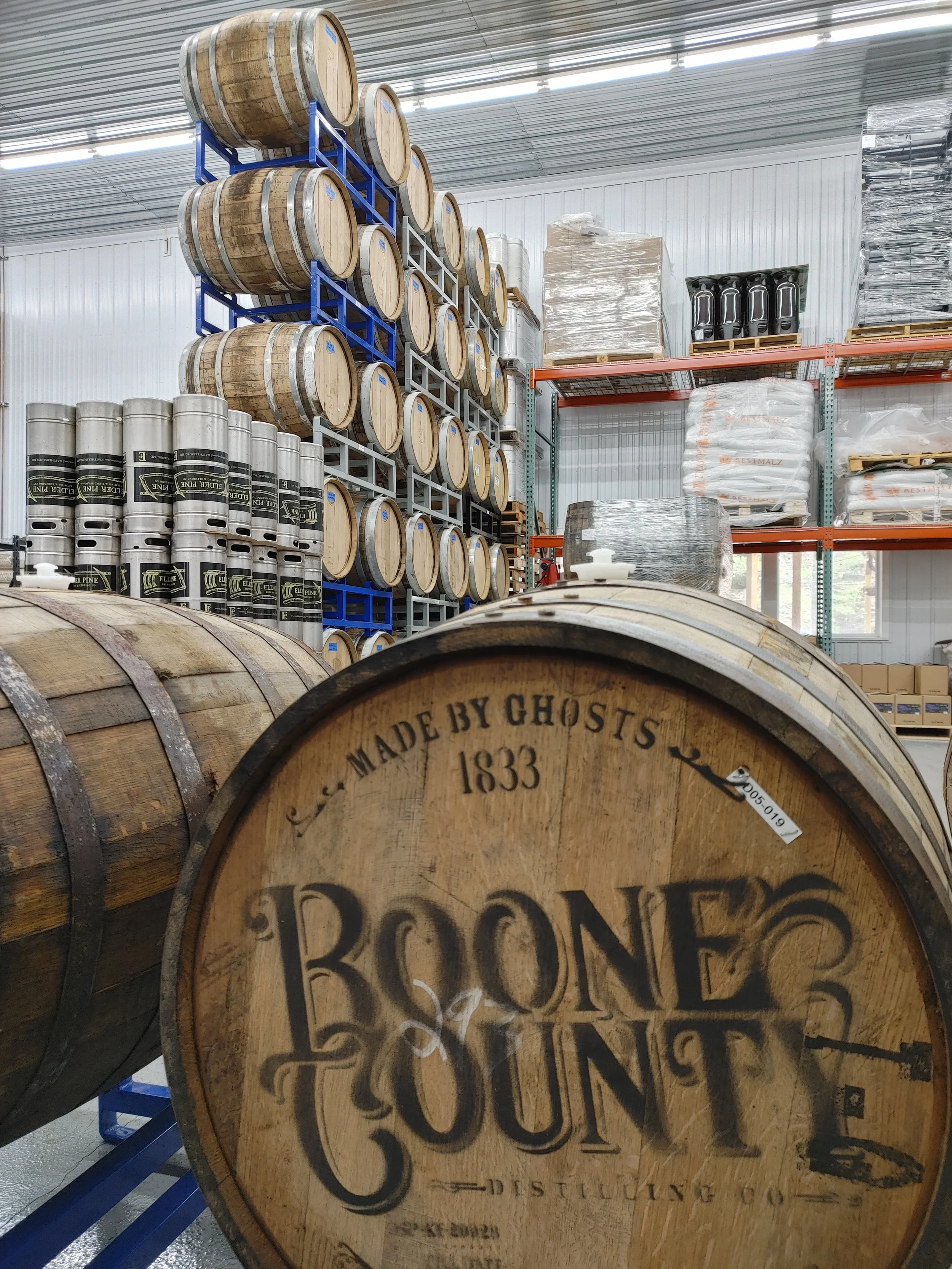
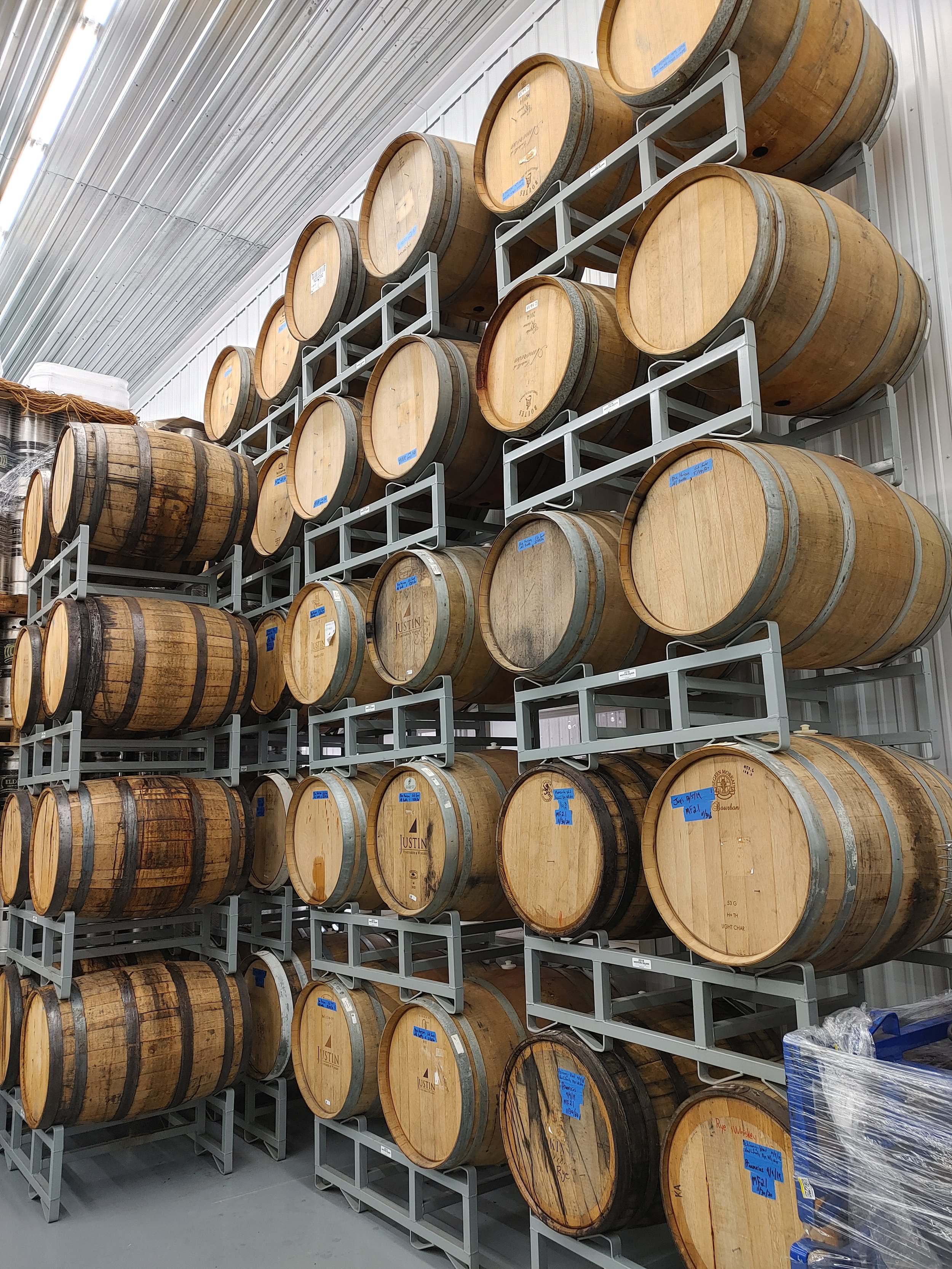
Aside from bourbon, I use a ton of rye whiskey barrels from Sagamore Whiskey. It’s hard not to use them when we can pick up the barrels in Baltimore just hours after they’re emptied. Other types of barrels we’ve used include: red wine, white wine, apple brandy, pear brandy, Scotch whiskey, American malt whiskey, wheat whiskey, rum, Sauternes, port, maple syrup, tequila, sotol, and gin. We also have a 930-gallon foeder (pronounced food-er) for our Belgian Blond Solera project (Moonscribe).
“ Moonscribe — a Belgian-style Blond Ale hopped with Riwaka and aged solera-style in our American Oak foeder. Solera is the act of removing only a portion of beer from the foeder and replenishing it with fresh wort to referment and continue aging in oak with traces of every batch before it.”
What kind of barrels do you seek for different beers, for example, bourbon barrels for stouts, red wine barrels for sours, and or other variations?
I seek heavily charred barrels (bourbon, rye, etc) for stouts & barleywines. I’ve aged a couple of barleywines in wine barrels, but I typically reserve them for sours.
Do you seek various species or regions of oak barrels, for example, American versus French or Hungarian oak?
I’m not too concerned about the oak’s country of origin. American whiskey barrels are made from American oak, and the wine barrels available to brewers are often a mix of various origins.
When purchasing barrels, do you use several sources? Do you have favorite sources?
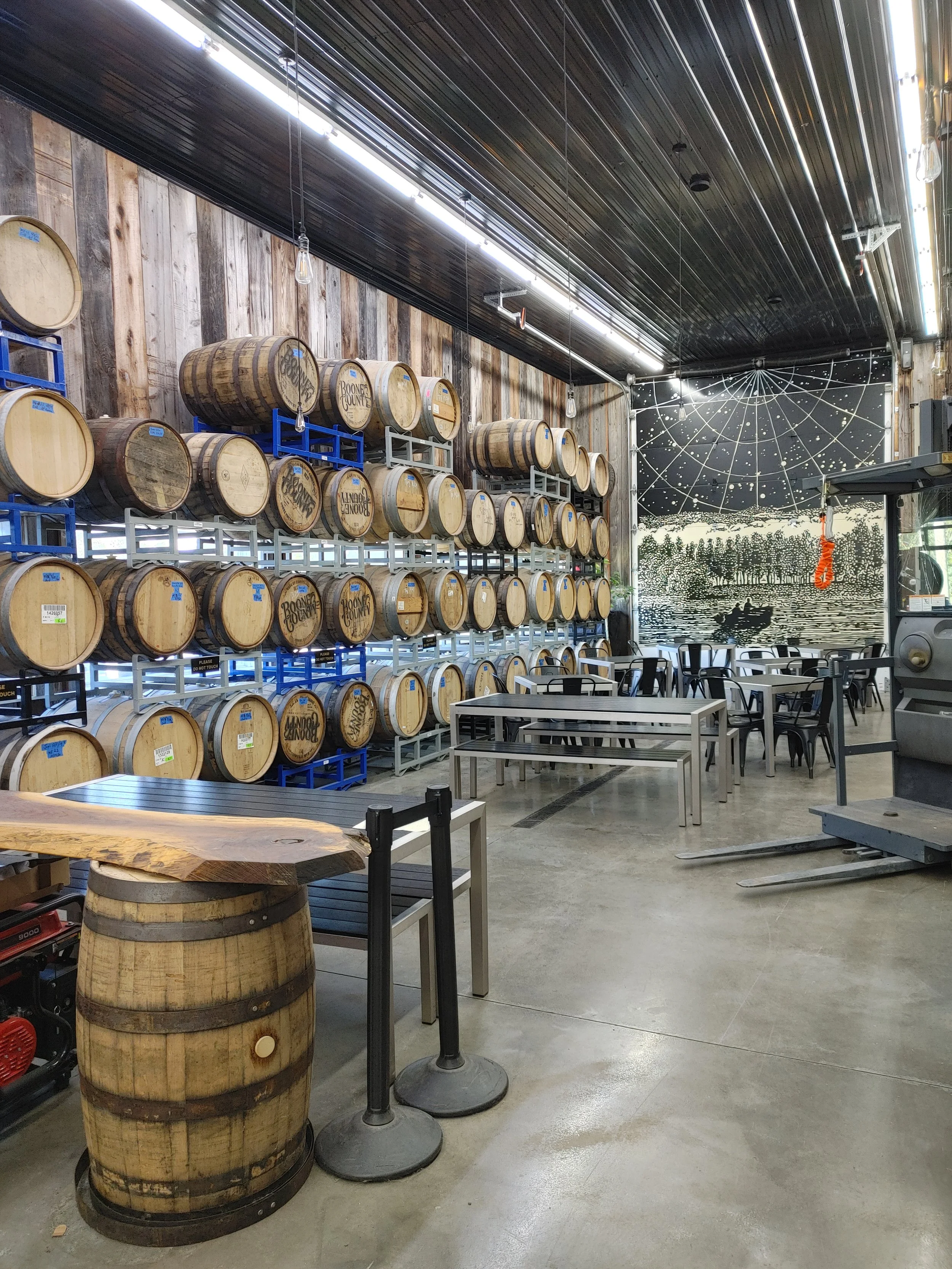
My favorite source for barrels is Sagamore Spirit. Having a top-tier rye whiskey distillery only 45 minutes away is fantastic. Aside from Sagamore, I use various barrel brokers for anything other than rye whiskey.
Do you source locally, e.g. Maryland distilleries or wineries?
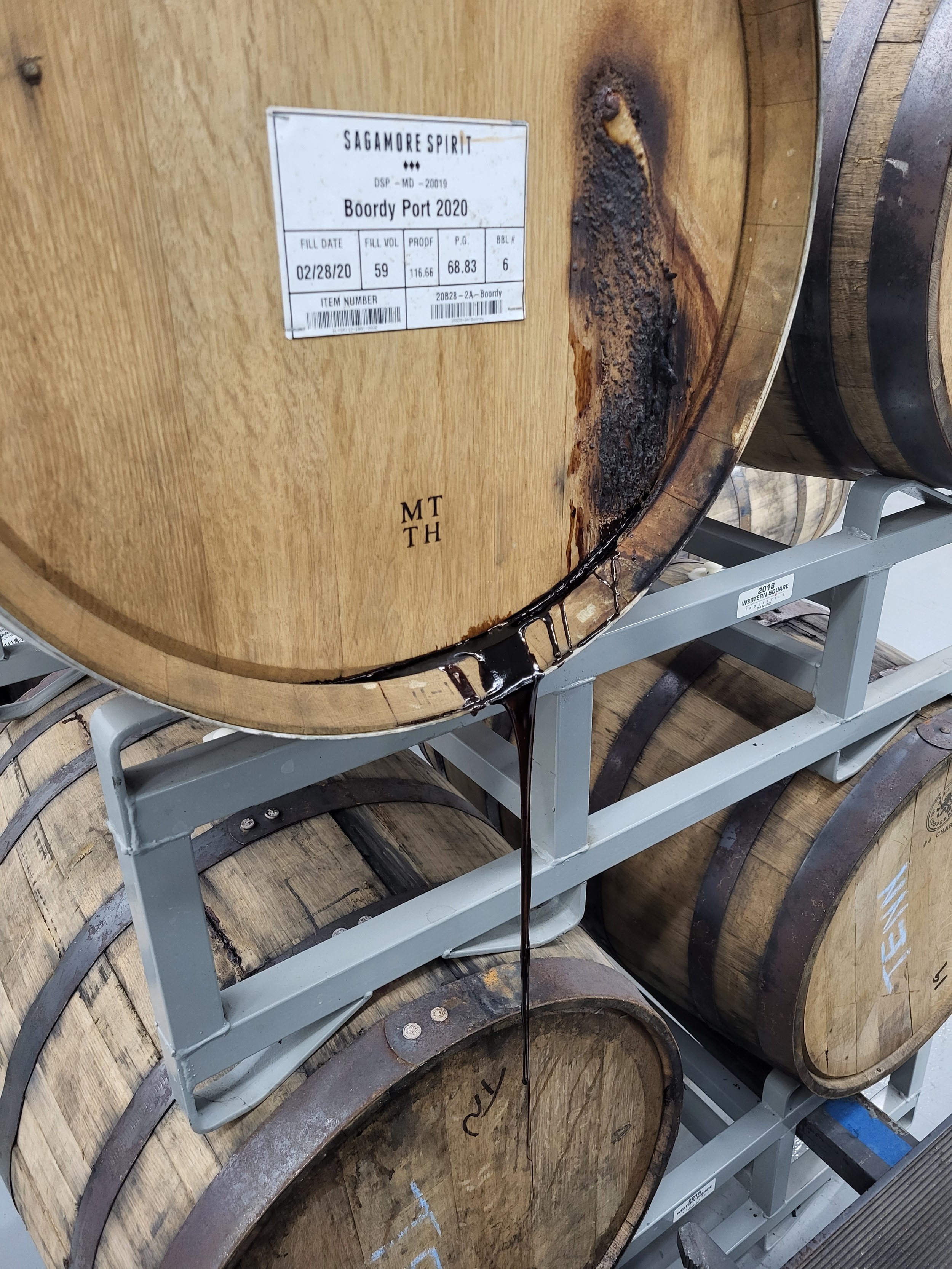
I source hundreds of barrels per year from Sagamore Spirit in Baltimore. I’ve also sourced wine barrels from Boordy Vineyards in Baltimore County.
How competitive is it to get certain barrels?
I personally don’t find it difficult to get the barrels I need, but perhaps I’m lucky and/or have networked with the right people over my 13+ year brewing career.
Are you looking for certain whiskeys?
I’m always on the hunt for Scotch whiskey barrels, but those are quite rare because Scotch distilleries reuse barrels, unlike American whiskey producers.
Do you use any virgin (not previously used) barrels?
I haven’t used any virgin barrels. Mostly because of how expensive they are.
Do you reuse barrels?
I’ll reuse wine barrels for mixed-fermentation sours, but I typically don’t reuse charred barrels. I’ve only reused charred barrels once when we emptied an Imperial Rauchbier from rye whiskey barrels and immediately filled the barrels back up with a low-ABV Vienna Lager. Fresh barrels would have been too overpowering for such a delicate beer.
Do you repair barrels?
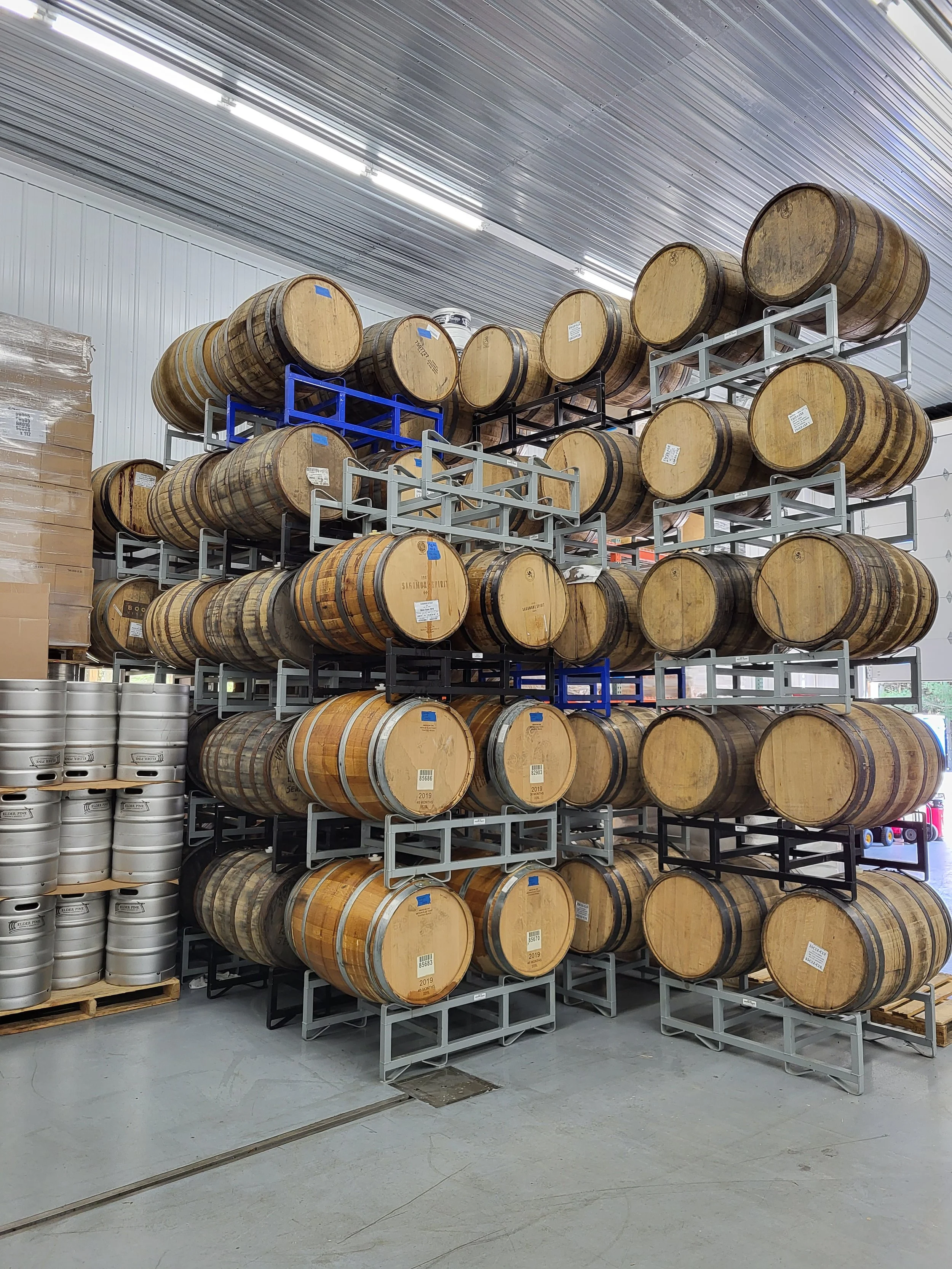
Yes, I handle any necessary barrel repairs in-house.
The Process
“How long can I boil this wort without disrupting the production schedule?”
What is your thought process when designing/creating barrel-aged and/or blended beers?
I enjoy creating a mix of classic barrel-aged beer styles (i.e. Imperial Stout, Barleywine, Sour/Wild Ale) and obscure styles that are difficult to find barrel-aged (i.e. Vienna Lager, Bock, Tmave Pivo, Rauchbier, low-ABV Porter/Stout, Brown Ale, Baltic Porter, Wee Heavy, etc). When designing barleywines, my first thought is “How long can I boil this wort without disrupting the production schedule?” which is what led me to create the first 24-hour-boil barleywine back in 2019. I didn’t start marketing our 24 hour boils until 2022 because initially I didn’t think that piece of information would resonate with consumers. However, barleywine drinkers went so wild for that first 24-hour-boil-marketed beer (Summon the Moon Lord) that other breweries started boiling wort for 24 hours to mimic that intense natural caramelization character that comes from such an intensely long boil.
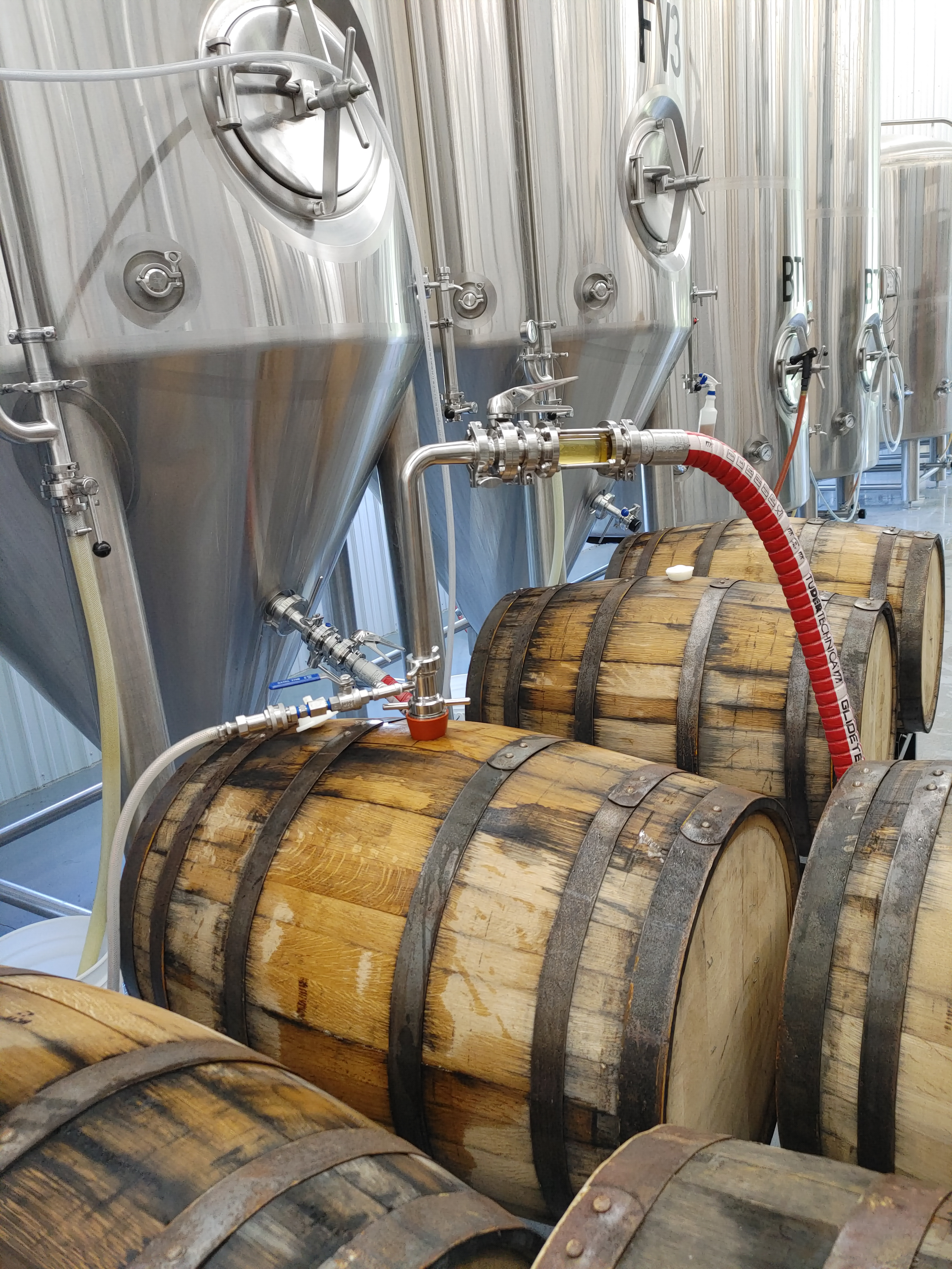
The tool we use to extract beer from barrels is often referred to as a "bulldog". It extracts beer from the barrel in a similar way to how beer is extracted from a keg: A wand is inserted to the bottom of the barrel, a silicone bung creates a seal and CO2 is used to lightly pressurize the barrel headspace, forcing the beer out of the wand into a tank.
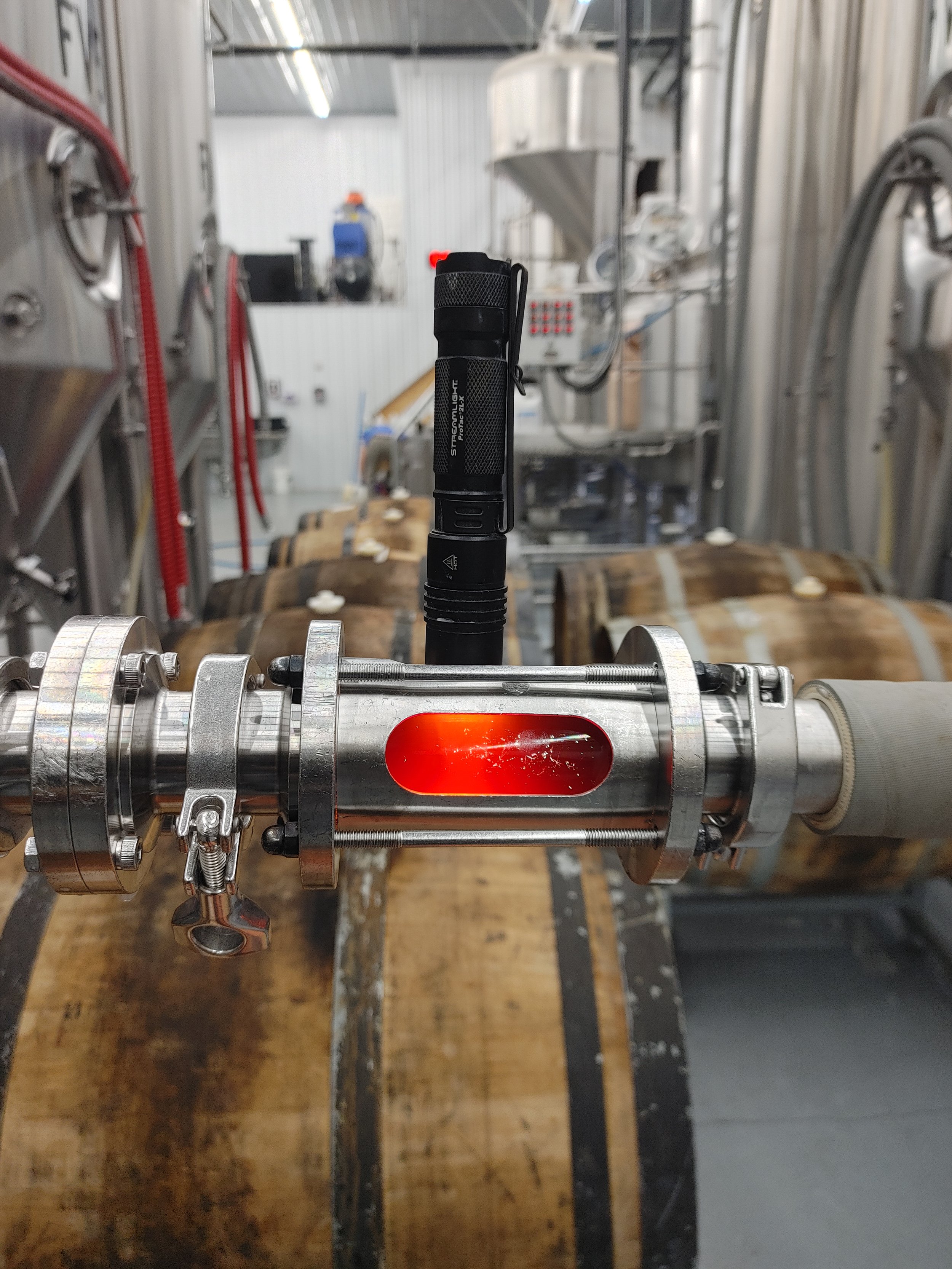
The streamlight is an LED flashlight being used to intensify the beer's color in the sightglass.
Do you have an end beer in mind when sourcing barrels, or do you let the barrel dictate which direction you will go with a beer?
I keep our production scheduled about six months out, so I plan beers several months in advance and source the barrels about a week before the beer is scheduled to be racked into them. This ensures that I’m getting the freshest barrels possible for the beer.
Describe your typical barrel-aging and blending process.
Fresh barrels are received 1-3 days prior to filling. The barrels are purged with CO2 to ensure the beer won’t become oxidized during the aging process. Once the barrels are filled, the racks are stacked in our cellar and typically go untouched for at least a year aside from routine sampling. Once we determine the beer is ready to be removed from the barrels, we conduct bench blending trials to determine which barrels to include in the final product. Every barrel ages differently so blending is a very important artform used to generate balance.
Do you do anything to prepare or condition the barrels when received?
Since we only use freshly emptied barrels that are in great condition, all we need to do is rinse off the outside of the barrels with very hot water and then purge the oxygen out from the inside with CO2 right before filling.
How long do beers normally mature in the barrels?
Our clean beer normally ages 12-18 months, and our sour beer normally ages 1-3 years.
Do you sometimes have beers that don't turn out as expected? If so, what do you do with it? Perhaps give a sample of a beer that created a “happy accident".
I don’t think I’ve had entire beers that didn’t turn out as expected, but we’ve definitely had single barrels that aged poorly and needed to be dumped. Luckily when we fill barrels we’re filling 8-16 barrels of the same base beer so while it hurts financially to have to dump one of those barrels, it doesn’t keep us from being able to release the beer as intended, albeit a lower volume than expected.
How well can you control the environment where the barrels rest?
Our entire building is climate controlled so the barrels stay a fairly consistent temperature year round.
Do you find that barrels you have used again develop a personality?
Sure, the barrels I’ve reused for sour beer are typically consistent, so I know roughly what to expect when I’m putting beer into those barrels.
How and when do you add adjuncts to the barrel-aged beers?
We rarely use adjuncts but when we do, they’re always added after barrel-aging to ensure the beer is properly aged and the adjunct characters are fresh when the beer is packaged about a week later.
Do you create your own microbial environment for beers, for example, by adding Brettanomyces and Pediococcus?
Brettanomyces, Saccharomyces cerevisiae var. diastaticus, Lactobacillus, and Pediococcus are all used to produce Elder Pine mixed-fermentation sours. The barrels we use for sours all have established cultures inside.
Do you experience evaporation from the barrels, and if so, how much?
Evaporation occurs in every single barrel-aged beer since wood is porous. We lose ~10% per year to evaporation.
Do you test and taste the beers while they're aging to see how the process is going? If so, how, when, and how often?
Yes, we typically taste barrels every 3 months. We use the “vinnie nail” method, so we aren’t opening up the barrel and exposing the beer to oxygen. The vinnie nail method is drilling a hole in the head stave and plugging it with a sanitized stainless steel nail so anytime we need a sample we can just pull the nail out to remove a couple ounces of beer.
“Never heard the term “Vinnie nail” until now? A “Vinnie nail” is simply a small-to-medium-sized nail driven into the head of a barrel through a pre-drilled hole for sampling purposes. They get their name from the man who first came up with the idea, Vinnie Cilurzo, the co-founder and brewer at Russian River Brewing Company.”
How do you determine when the beer is ready?
This is far from a scientific explanation, but the beer is ready when it’s ready. When a proper balance is achieved and all the desired flavors/aromas are present, the beer is ready to be removed from the barrels.
Can you explain your solera method for blending and aging beer?
We have one very large solera project. Our 930-gallon foeder is the vessel that ferments/ages our Belgian Blond Ale, Moonscribe. Solera is the act of removing only a portion of the beer from its vessel and replenishing it with fresh wort to ferment and age with traces of every batch before it. Our solera project has been going on since the summer of 2024, and we’ve never had to repitch yeast. Every three months, we remove about half of the beer from the foeder and immediately replenish that volume with fresh wort. Moonscribe is one of my personal favorite beers, and I’m very glad we’re able to produce such a unique beer for Maryland beer lovers.
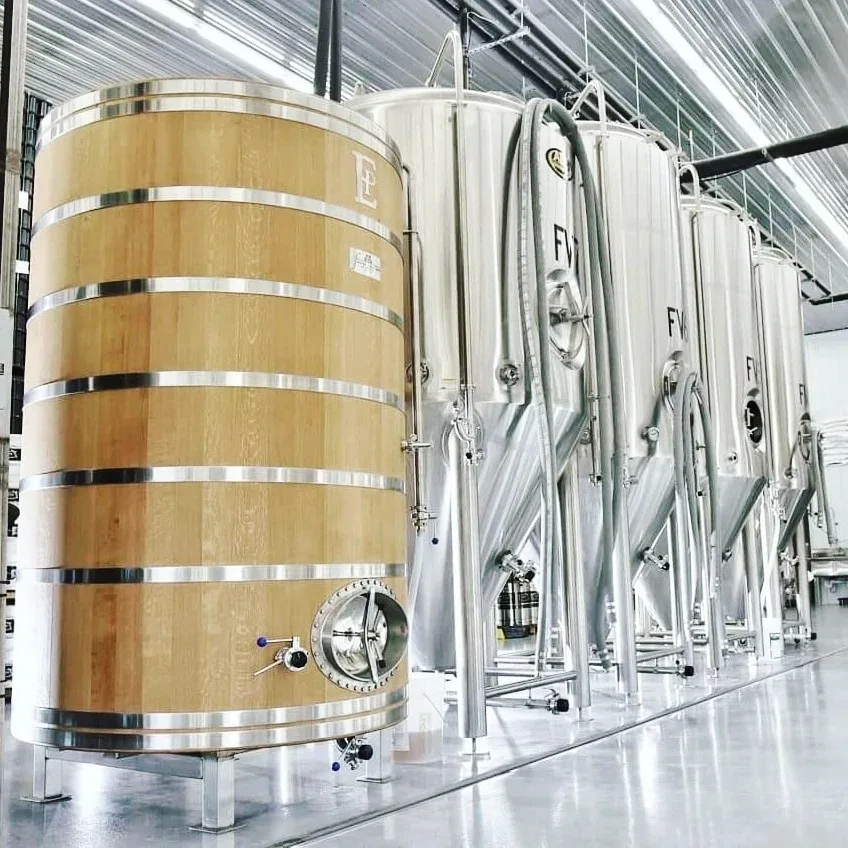
Elder Pine 930-gallon foeder
How popular have your barrel-aged beers been? Growing, stable, declining?
Our barrel-aged clean beers are always growing in popularity, but proper mixed-fermentation sour beers seem to be declining as a whole ever since the introduction of ice cream smoothie sours around the state.
Are there any new trends or techniques that have emerged recently when using barrels to condition beer?
I haven’t noticed anything recently.
Final Thoughts
Do you have your favorite barrel-aged beers?
My favorite EP barrel-aged beer is probably Barrel-aged Transpire. Transpire is our 5.4% ABV Rye Porter that I’ll then age for about a year in freshly emptied Sagamore Rye whiskey barrels. Aside from that, Moonscribe, our Solera Belgian Blond Ale made in our foeder, is one of my favorites, and I love the intensity of our 24-hour-boil barleywines.
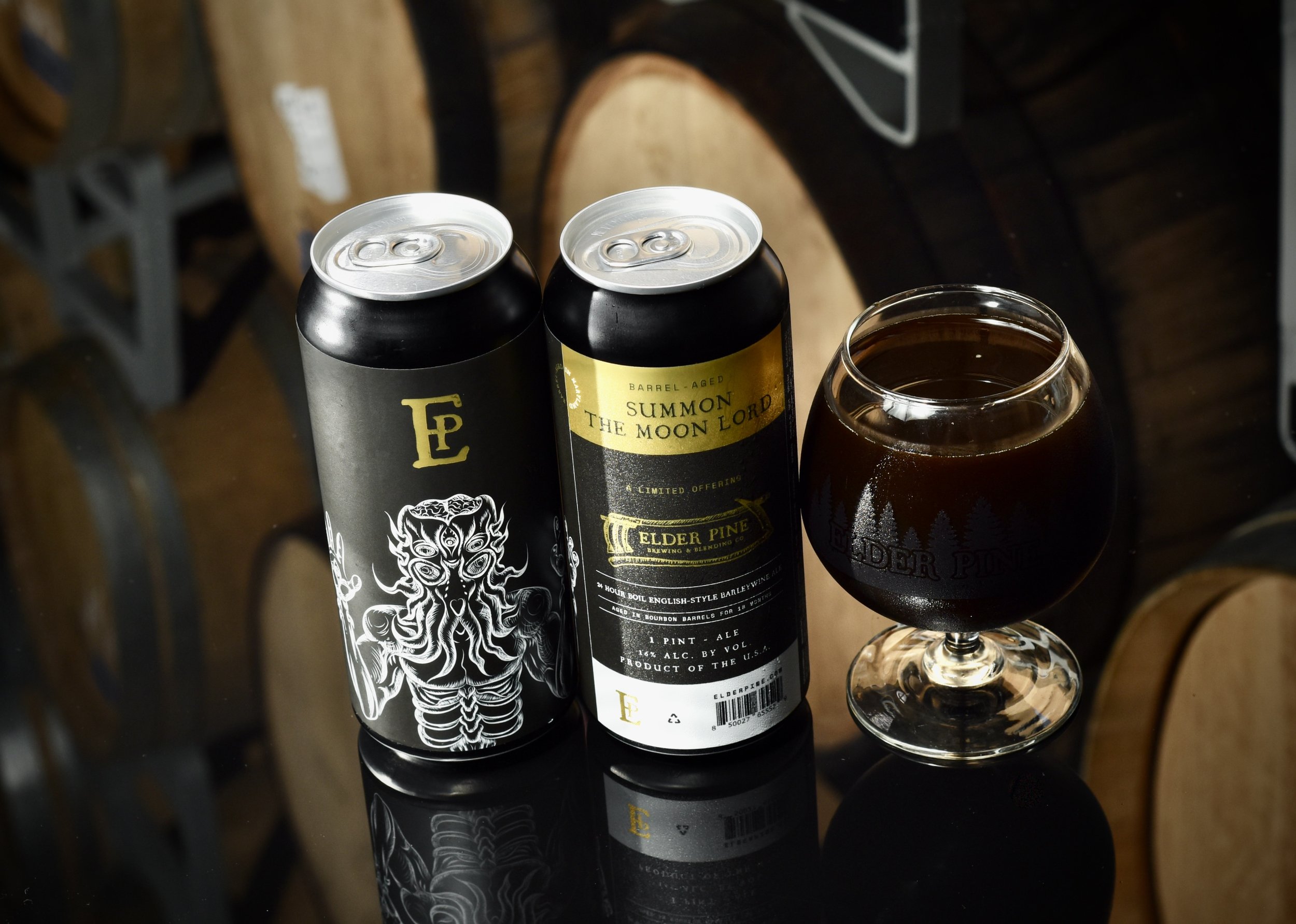
Summon the Moon Lord, an Elder Pine 24-hour boil barleywine
Stay Tuned for Part 3
In Part 3 of this series — Enjoying Barrel-Aged Beers, Parts 1 and 2 come together to offer suggestions from these two brewers on drinking, cellaring, and sharing their BA creations.