Mully’s Brewing: A Southern Maryland Distination
The first time I walked into Mully's Brewery, I had sandy boots and a family in tow. We'd spent the morning hiking at Calvert Cliffs, and a cold beer in Prince Frederick seemed like the right way to finish the day. That was four years ago. When I came back this August, I brought a notebook, a couple of clip-on mics, and a list of questions for co-owner Cindy Mullikin.
Southern Maryland is personal ground for me. I spent the better part of a decade living in Charles County and Benedict after college, so I was curious how a production brewery has held its own for more than a decade in a place that most of the state's travelers only pass through on the way to Solomons.
The short answer is patience, stubbornness, and a willingness to rewrite the business plan whenever the market or the law changes underneath you.
Introductions
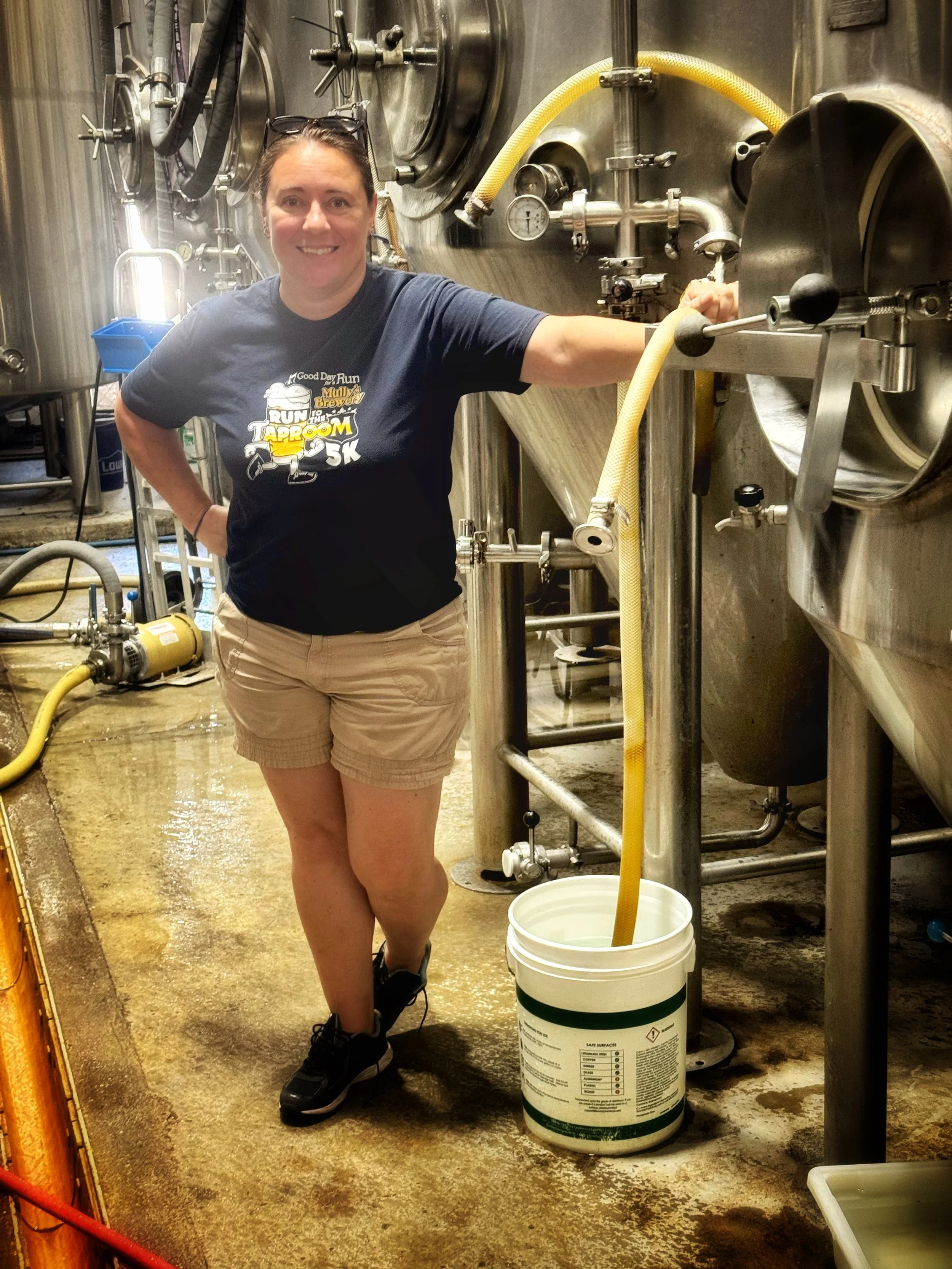
Cindy Mullikin in Mully’s brewhouse.
Mully's Brewery is the work of Cindy and Jason Mullikin, a husband-and-wife team who own and run the business together. The name is a family nickname, a shortened form of Mullikin. The brewery sits at 141 Schooner Lane in Prince Frederick, the county seat of Calvert County, and it opened its doors in October 2013. It holds the distinction of being Southern Maryland's first production brewery.
Cindy handles much of the business side of the operation, and she is active in the Brewers Association of Maryland. Jason took the technical route. Before they opened, he earned brewing certification through the Siebel Institute and the World Brewing Academy. Meanwhile, Cindy worked closely with the local Small Business Development Center to test whether the numbers could work.
“We fell in love with the process. It’s a good mix of art and science.”
Like most brewery owners, they started as homebrewers. What surprised me was that neither of them drank much beer before that.
"We fell in love with the process," Cindy told me. "It's a good mix of art and science."
Once they started brewing and learning the styles, she said, they "definitely went down a rabbit hole."
Origin Story & Vision
The rabbit hole led to a road trip. At the time, Maryland had only about thirty breweries, and visiting three or four of them meant real driving. One stop was Baying Hound Aleworks in Rockville, which has since closed. Cindy described it as "a nanobrewery before there really were any in the state." The other stops were larger breweries whose beers the couple already knew from store shelves and restaurant taps.
What stuck with them was the taproom experience. "When you went to their taproom, all of a sudden it had this diverse tap menu," Cindy said. "You're like, wow, I didn't even know you made all of these."
They wanted to bring that to Southern Maryland, and they went in with their eyes open. "We're like, well, maybe there's a reason there aren't any breweries in Southern Maryland," Cindy said with a laugh. They built the business around distribution so that, if the local market proved thin, they could still get their beer to other parts of the state.
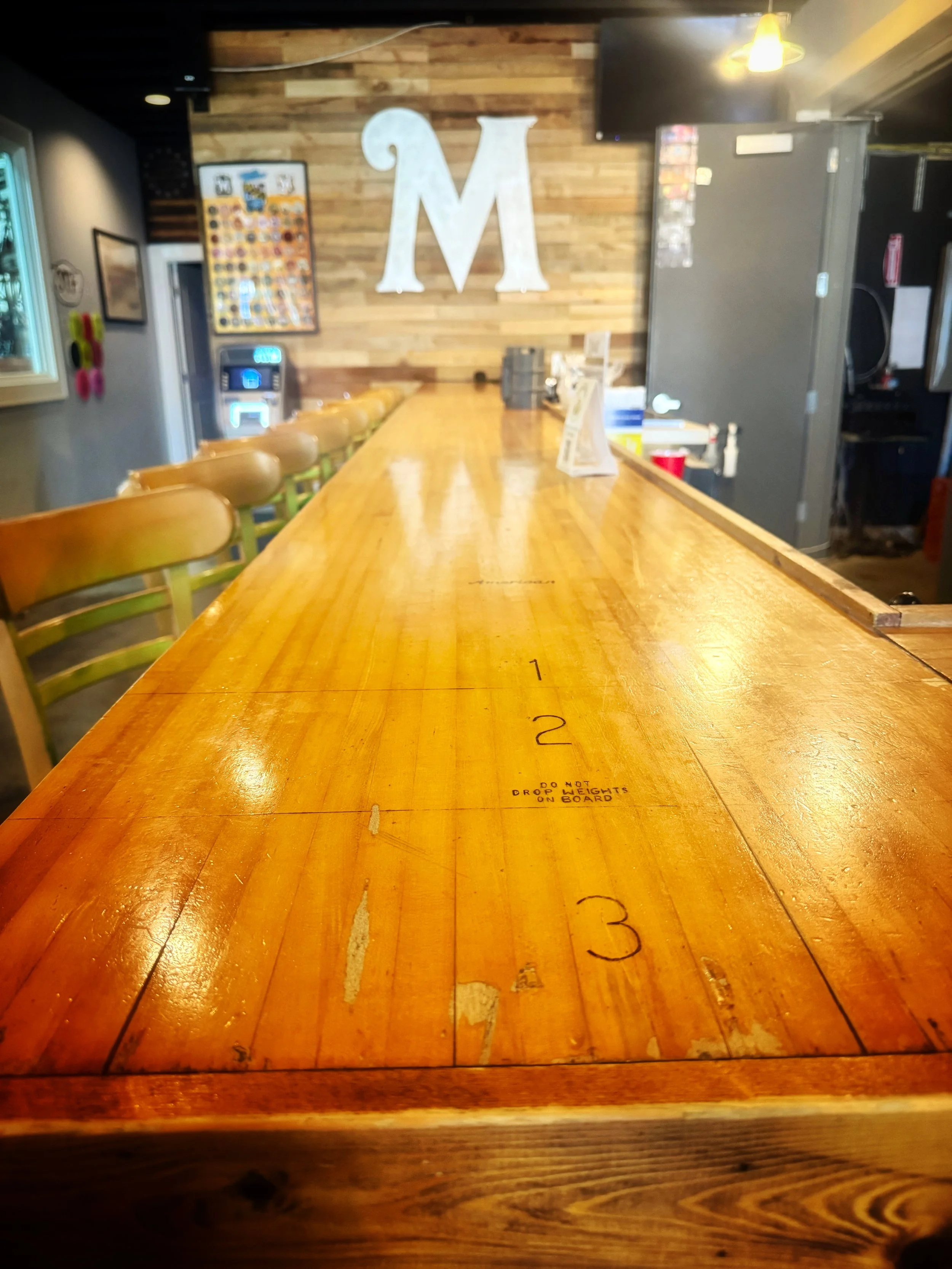
Taproom Bar Top From Repurposed Shuffleboard
Maryland law shaped that model as much as caution did. When Mully's opened, a Class 5 production brewery couldn't sell pints in its own taproom. Visitors got flights, and the taproom was sized to match. Changing that required new state law and a new county zoning ordinance. Calvert County had provisions for farm breweries but none for a Class 5 manufacturer. The Ruddy Duck, the brewpub in Dowell, came before Mully's, but the county treated it as a restaurant.
Was the county cooperative? "Overall, yes," Cindy said. "I learned things don't really happen super fast in government." What worked, she said, was diligence: talking to the right people, keeping good relationships, and advocating for the business.
“There are more people in one mile of this [Montgomery County] market than there are in a ten-mile radius of our brewery.”
Looking five years out, Cindy's vision is a satellite taproom with food, which the Prince Frederick facility can't serve. She remembers her first farmers market in Montgomery County, with people simply walking up from nearby apartments. "There are more people in one mile of this market than there are in a ten-mile radius of our brewery," she recalled thinking. A walkable, arts-oriented town would suit her, though licensing makes it harder than it sounds. "A restaurant could just open up another restaurant anywhere," she noted, "but a brewery is a little different."
Food matters to her for another reason. At past pairing dinners, she's watched guests try styles they'd normally skip. "Some people might not typically drink a deep red wine, but if they're having a steak, they'll have it," she said. "Beer is the exact same way. People just don't think of it that way."
Brewery Operations
The Brewhouse
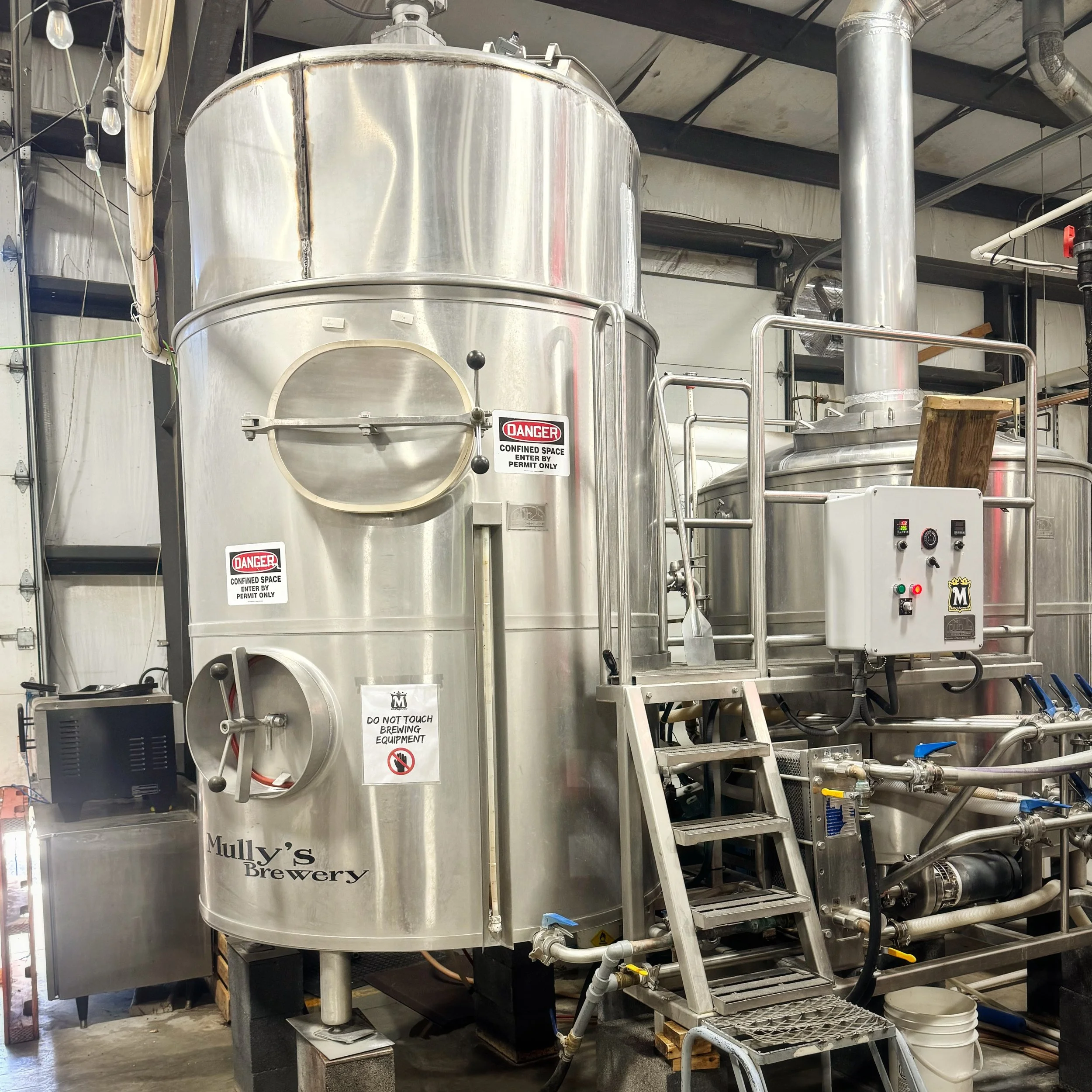
Mully's brews on a 15-barrel brewhouse bought secondhand from Lazy Magnolia Brewing Company in Mississippi, which had been running two 15-barrel systems in tandem. The Mullikins bought the brewhouse and one fermenter, then kept reinvesting in the business. Today the cellar holds four 15-barrel fermenters, two 30-barrel fermenters, and a 60-barrel fermenter.
A three-barrel pilot system, which grew out of the couple's homebrew setup, is used to test recipes and new hop products such as Incognito and DynaBoost, and to fill gaps in the tap list. "If we find too many IPAs or not enough dark beers, or not enough light beers, we can always use our pilot system to balance that out," Cindy said. Employees who reach a certain tenure get to choose a beer and help brew it, and those batches usually stay in the taproom.
Small batches sold across their own bar also justify pricier ingredients, though not every experiment lands. A pickle beer, Cindy admitted, "was only okay." On the production side, the head brewer calculates IBUs by hand for each new lot of hops, adjusting the recipe to that lot's alpha acids, even though software could do it.
Packaging Lessons
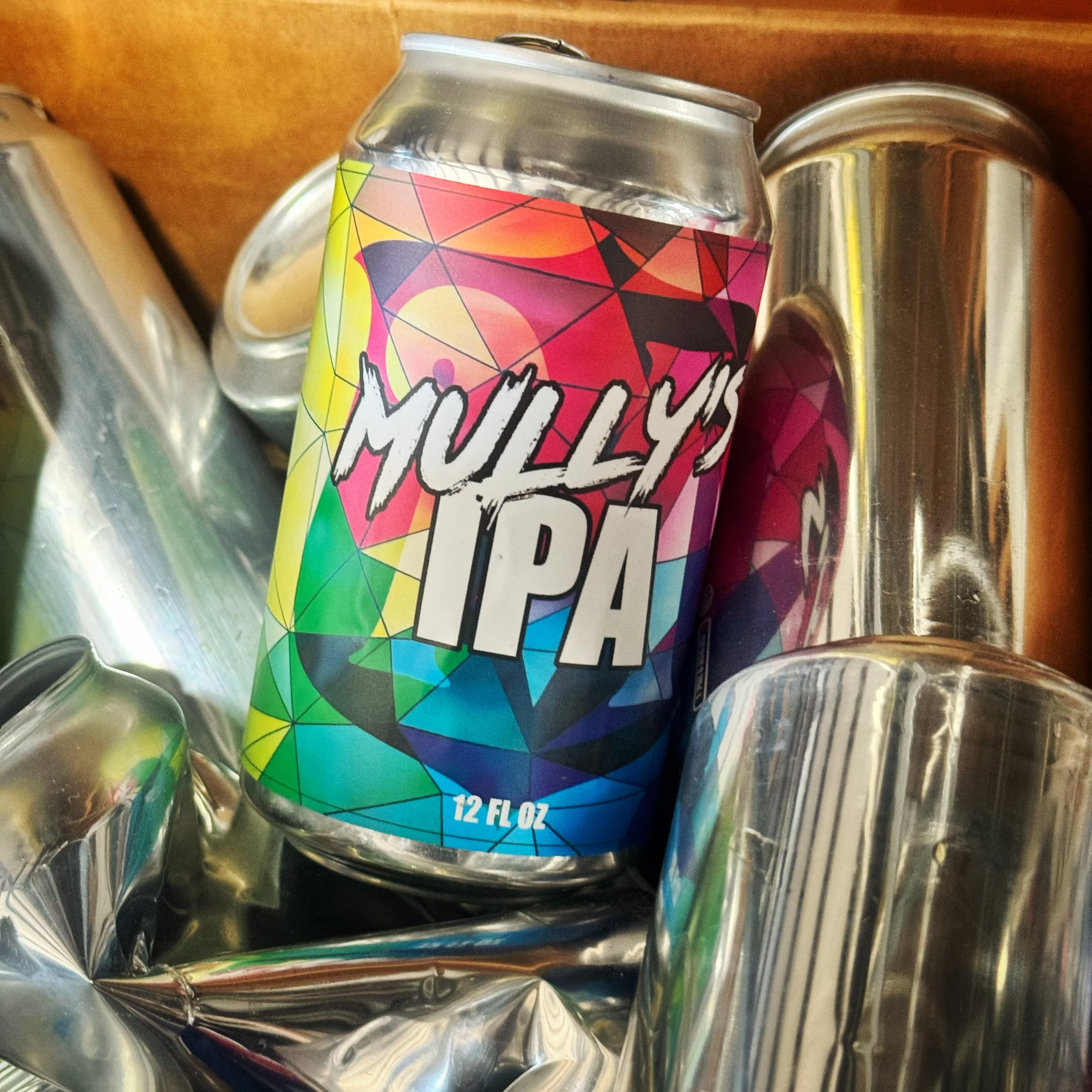
The original plan called for cans, but back then you had to buy a full truckload. Distributors warned that West Coast–style bombers wouldn't sell in Maryland, so Mully's bottled, then moved to mobile canning with Iron Heart, and eventually bought its own line. COVID brought a lesson there too. Can and lid suppliers kept changing, and each had slightly different seaming specs. "Thousandths of a millimeter could be the difference between a leaking can and a solid can," Cindy said.
Production and Distribution
Mully's produces roughly 1,500 to 2,000 barrels a year. Cindy is candid that the past couple of years have been flat, which, as she put it, "I guess is better than going down."
About two-thirds of that volume goes out to distribution, and the remaining third is poured in-house. Mully's has always had to distribute. When it opened, Maryland didn't allow self-distribution, so the brewery signed with Bob Hall for Calvert, Charles, and Prince George's counties. It later added Guy Distributing in St. Mary's and eventually moved to a single statewide distributor. That relationship ended this past February, and Mully's has been self-distributing since.
"We're doing it backward," Cindy said. "Most people self-distribute closer to home and have a distributor far away."
Ingredients and Collaborations
Mully's buys most of its hops on the spot market instead of under contract, because its recipes keep evolving. A few years ago, some varieties hit $30 a pound, which made certain beers not worth brewing. Prices have since settled.
The strongest local connections are in the barrel program and in partnerships. The brewery is "dipping our toe" into barrel aging, two or three barrels at a time, and it prefers freshly dumped barrels from Maryland distilleries over shipped barrels that arrive dried out. Mully's has collaborated with other Maryland breweries, though not recently. It also brewed a pre-Prohibition porter with a custom label for the restoration celebration at Rich Hill, the historic house in Charles County. Cindy said that beer "turned out amazing."
Brewing Style
Cindy calls the approach "overall traditional," with room for one-offs and trends. A hazy IPA is always on, lagers are gaining ground, and the lineup covers light and dark beers, low and high ABV, and year-round sours. The sours are kettle-soured, most often as a Berliner Weisse, a process that kills off the bacteria before fermentation. Mully's does no wild or mixed fermentation. There's usually a Belgian on as well, such as a saison, a dubbel, or the quad that recently kicked. "Around here, there's not a ton of breweries," she said, "so we don't have to have a specific niche."
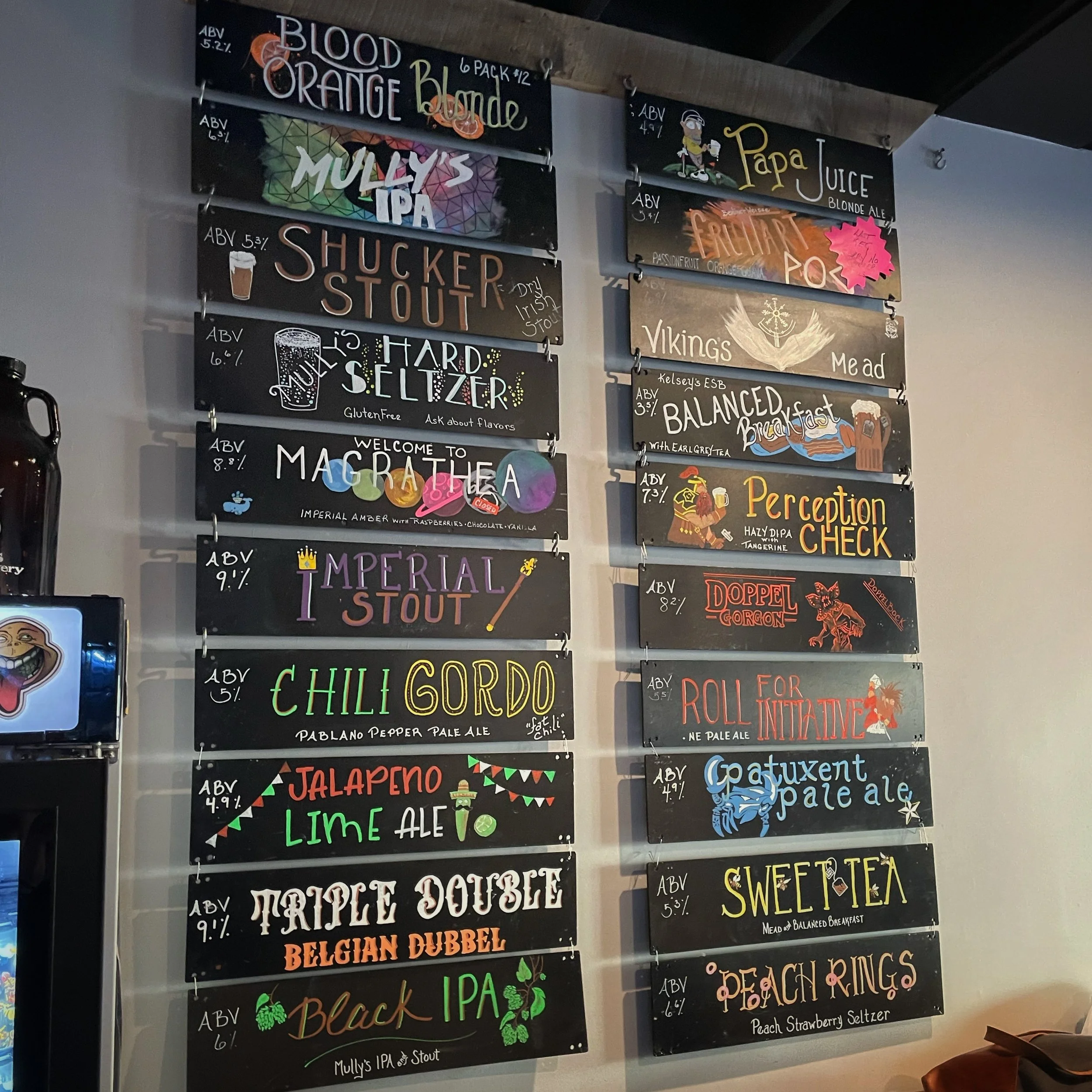
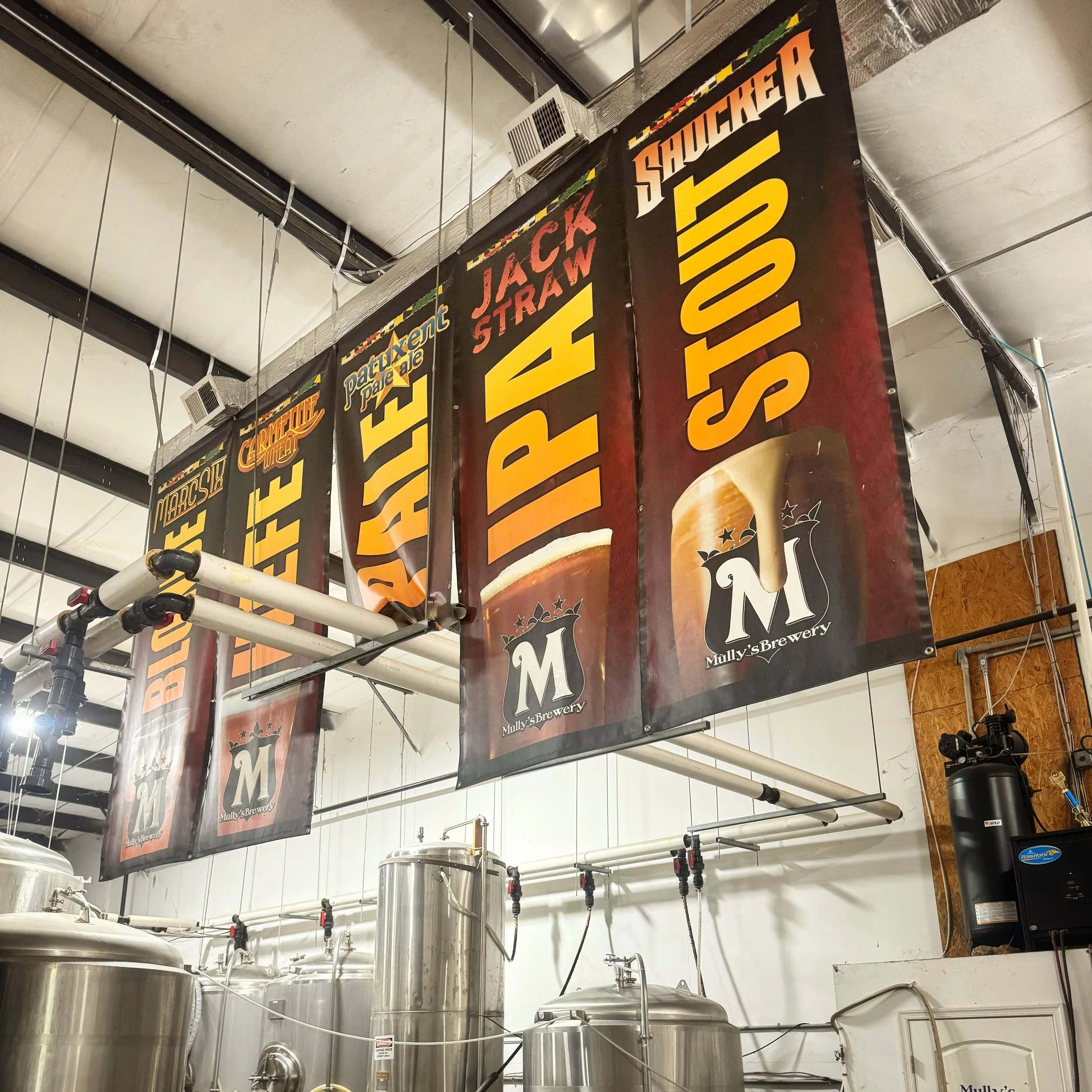
The flagship is the Blood Orange Blonde, an award-winning beer that started as a taproom experiment. Mully's now brews a 30-barrel batch of it about every other week. Tellingly, only two of the five beers Mully's opened with are still made, and both are now seasonal. "Just because it's what you want to brew doesn't mean it's necessarily what the customer wants," I suggested, and Cindy agreed.
Her soft spot is maltier beer. She named ambers, Vienna lagers, ESBs, and brown ales, which she thinks "don't get as much love as they should." A Vienna lager was in the tank when I visited. She loves these styles because they are sessionable, versatile, and easy to pair with food.
What does she like most about the work? The brewing process itself. "Brewing can be as simple or as complicated as you make it," she said. "You can definitely go down a rabbit hole on just how one degree of temperature difference makes an impact." She also mentioned the air humidity and the temperature of the grain going in.
Location
Why Prince Frederick?
The Mullikins, who live in La Plata, spent months searching Charles County without luck. Then, driving to visit Jason's parents in Calvert County, where he grew up, they passed a "For Lease" sign on an industrial building off Route 231. The space was the right size, the price was fair, and Prince Frederick sits roughly in the middle of Southern Maryland. "So we figured we'd give it a shot," Cindy said.
What Makes It Unique
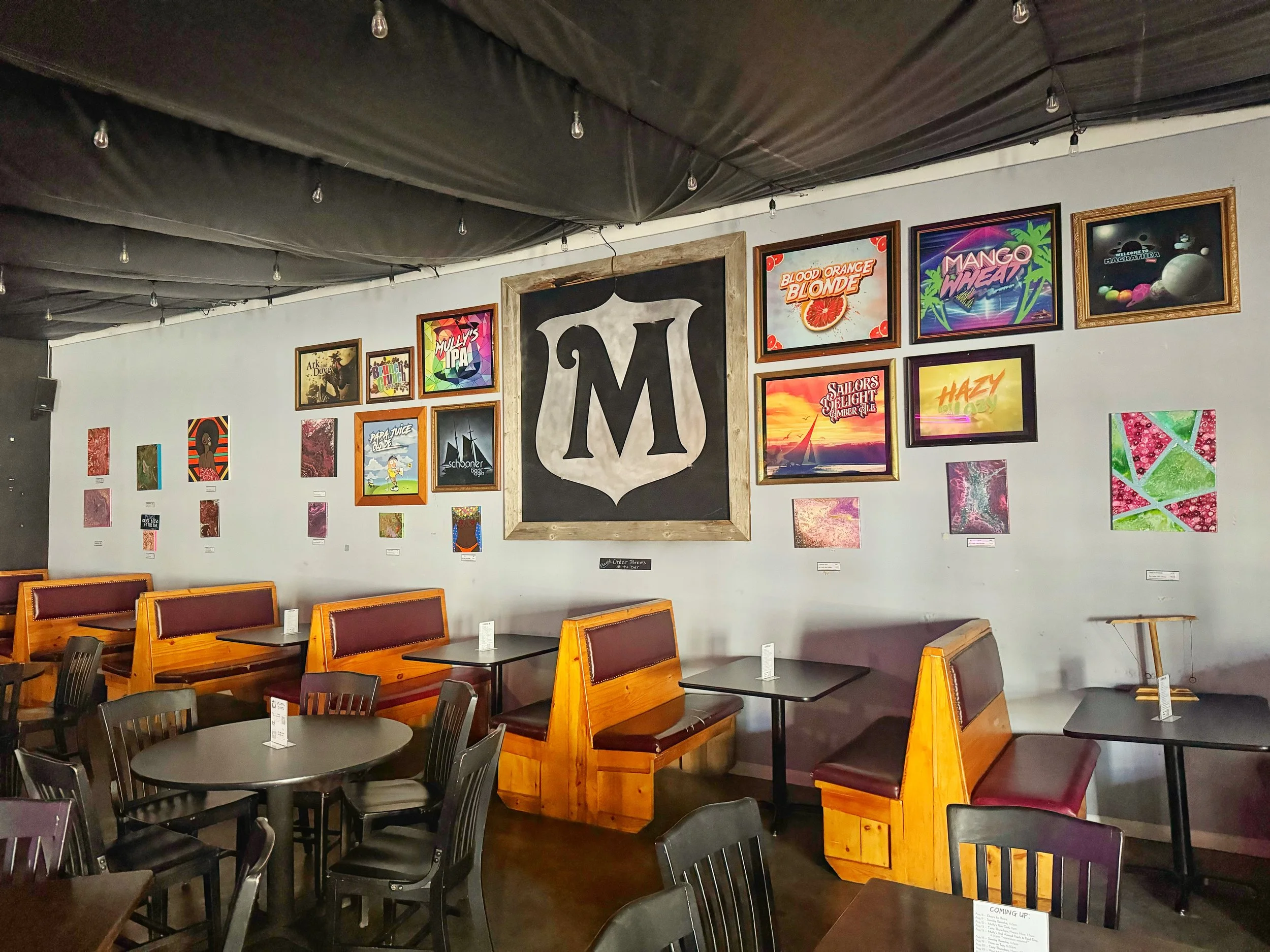
This is a destination brewery, and Cindy says so directly. "We're off the beaten path." That has shaped a loyal local following, with weekly regulars, monthly visitors, and event-only crowds. It also draws a steady trickle of out-of-towners, many of them in the area for weddings at local venues. The taproom is dog-friendly and family-friendly. It has grown well past its flights-only origins with a 1,500-square-foot expansion into the neighboring space.
Events keep people coming back. Mully's runs daily, weekly, and monthly programming, hosts an annual 5K, and put on a Southern Maryland Beer & Wine Festival in May. That festival drew a couple hundred people, and Cindy hopes to rotate it among venues across the region. "Ever since COVID, I feel like the excitement hasn't been the same," she said. "We wanted to bring that back to life."
She sees the same energy returning statewide. Through the Brewers Association of Maryland, she's watched brewers re-engage after years in survival mode, and the association is reviving its state competition to help small Maryland breweries that can't justify GABF entry fees get national attention.
Closing Thoughts
I asked Cindy what she hopes guests talk about as they leave. “Their next visit”, she said, “or where they can find Mully's closer to home.” Her proudest moments aren't medals. They're pulling up opening-day photos to see how far the brewery has come, or hearing a stranger at an outside event say, "Oh, we love your beer," and realizing Mully's has become part of people's lives in ways she never sees.
Beyond Mully's: Where Else to Explore
Cindy's pitch to visitors from D.C., Baltimore, or Annapolis matches the day I spent here years ago. Hike Calvert Cliffs, hunt for fossils, or explore the area's many trails. Bring the dog, then cool off with a beer. Solomons offers waterfront dining and a classic Bay-town getaway.
Everything below is within roughly 30-40 minutes of Prince Frederick. Drive times are approximate.
Breweries
Unauthorized Brewing — North Beach (~25 min north)
Three friends who met as regulars at the late Scorpion Brewing in Owings opened this two-barrel brewery on Bay Avenue in August 2025, putting beer back in northern Calvert. The taproom is small and fills up fast, but the rotating board swings from blondes and IPAs to sours, and they've added growler fills for select beers.
Ruddy Duck Brewery & Grill — Dowell, just outside Solomons (~20 min south)
A brewpub since 2009 and the obvious dinner stop for anyone doing a Solomons day. The house list runs wider than you'd expect — IPAs, German-style lagers, a few stouts — and the duck fat fries are the order regardless of what's in your glass.
Southern Maryland Biergarten at Running Hare Vineyard — Prince Frederick (~5 min)
The biergarten on the vineyard grounds keeps regional beer pouring alongside the wine. It's seasonal, so late-season visitors should check before driving over.
Everyday Saint Brewhouse — St. Leonard, MD (~40 min)
Everyday Saint Brewhouse is a nano-brewery in historic downtown Leonardtown. Operating from the basement of the historic Duke House, the brewery produces small batches of creative, frequently rotating beers and experimental releases. Its intimate, vintage-inspired taproom opened in December 2025.
Wineries
Running Hare Vineyard — Prince Frederick (~5 min)
Three hundred acres of rolling vines and a Tuscan-style villa that looks more Napa than Calvert. Come for the setting, stay for the fact that the beer drinker in your group has somewhere to go too.
Perigeaux Vineyard & Winery — St. Leonard (~15 min south)
The serious-minded option: Bordeaux-style reds and whites made from grapes grown on the estate, poured in a tasting room surrounded by the vineyards.
Cove Point Winery — Lusby (~20 min south)
The first winery in Calvert County, and still a small operation. Expect fruit and dessert wines and ciders alongside the dry stuff, made from Maryland-sourced grapes.
Solomons Island Winery — Solomons (~25 min south)
A micro-winery dating to 2002 that leans into sweet, fruit-forward bottles. Its tasting room has moved to the waterfront next to The Pier, which makes it an easy add-on to a boardwalk stroll.
Fridays Creek Winery — Owings (~20 min north)
Tastings happen in a restored tobacco barn with a local-art gallery upstairs, and most of the wine comes from their own Patuxent River vineyards. Rustic in the best sense; bring a picnic.
Spirits
Tobacco Barn Distillery — Hollywood (~30 min, across the Thomas Johnson Bridge)
A true farm distillery: the corn in the bourbon is grown on-site, and the rye comes from Mennonite farmers in nearby Loveville. Judges at the American Craft Spirits Association named them America's best farmer-distiller in a blind tasting. Weekend walk-ins; weekdays by appointment.
Fun Things to Do Nearby
Calvert Cliffs State Park — Lusby (~15 min south)
The marquee attraction: a 1.8-mile trail through woods and wetlands ends on a Bay beach where Miocene shark teeth wash up with the tide. Go at low tide, stay out from under the cliffs (it's closed and illegal to collect there), and know that part of the park is open to hunters from September through February.
Flag Ponds Nature Park — Lusby (~10 min south)
The shorter-walk alternative for fossil hunting, with sandy beaches, freshwater ponds and views of the cliffs. Guided fossil tours are available through a local outfitter if you want an expert along.
Battle Creek Cypress Swamp — Prince Frederick (~5 min)
A boardwalk through one of the country's northernmost stands of bald cypress. Twenty minutes here feels like you've driven to the Carolinas.
Calvert Marine Museum — Solomons (~25 min south)
Fossils from the cliffs, river otters, a restored oyster house and the only museum on the East Coast with two lighthouses, including the walk-through Drum Point Lighthouse. Open daily, 10 to 5; their Waterside concert series brings real national acts to the Patuxent.
Annmarie Sculpture Garden & Arts Center — Dowell (~20 min south)
Wooded paths lined with sculpture, a gallery building, and pay-what-you-can admission on regular days. It's right down the road from the Ruddy Duck — a natural pairing. Fall brings adults-only After Hours nights and a Halloween festival; the Garden in Lights show takes over in December.
Jefferson Patterson Park & Museum — St. Leonard (~15 min south)
Maryland's state archaeology museum sits on 560 acres along the Patuxent and covers 9,000 years of documented human history, with a War of 1812 exhibit and a recreated Woodland Indian village. Admission is free; the grounds are open year-round, but the buildings close for winter after November.
Chesapeake Beach & North Beach — (~25 min north)
Pair a pint at Unauthorized Brewing with a walk on the North Beach boardwalk, then stop into the Chesapeake Beach Railway Museum, housed in the last surviving depot of the line that once hauled D.C. day-trippers to a Bayside amusement park. Admission is free; hours shrink to weekends in November.
Patuxent River Naval Air Museum — Lexington Park (~30 min, across the bridge)
The only museum in the country dedicated to naval aviation test and evaluation, with more than 25 aircraft on display and flight simulators to try. Closed Mondays. Combine with Tobacco Barn for a St. Mary's side trip.
Historic St. Mary’s City — (~45 min)
Historic St. Mary’s City is a living-history museum and archaeological site preserving Maryland’s first colonial capital, founded in 1634. Set along the St. Mary’s River, visitors can explore reconstructed buildings, archaeological exhibits, a working tobacco plantation, and the Maryland Dove sailing ship. Costumed interpreters and hands-on demonstrations bring Maryland’s early colonial history and diverse cultural heritage vividly to life. Stop in to
Farthings Pub / Angelika's Kitchen for a pint and sandwich (recommended).
Mully's Brewery
141 Schooner Lane, Suite 15
Prince Frederick, MD
mullysbrewery.com
Google map