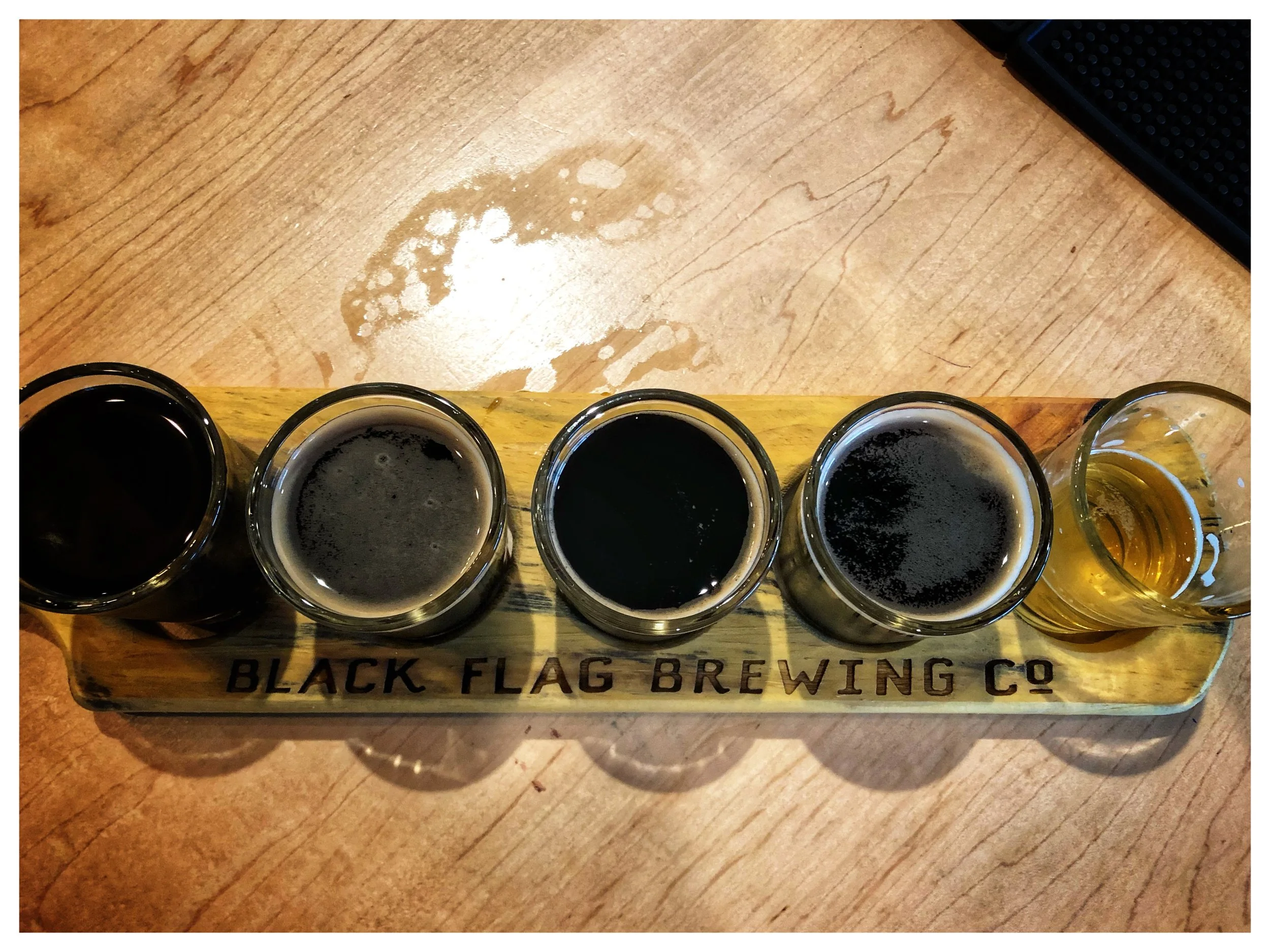
Prince George’s County beer company acquires Columbia brewery, preserving the Black Flag brand while establishing its first permanent brewing facility.
After weeks of uncertainty about its future, Black Flag Brewing Company in Columbia has found a new owner and a new lease on life. Liquid Intrusion Brewing Company, a Prince George’s County-based beer business founded by Andrew and Jasmine Dill, announced November 20 that it had acquired Black Flag, bringing together two Maryland beer brands under one roof.
The acquisition saves a brewery that appeared headed for closure at the end of November and gives Liquid Intrusion something its founders have been pursuing for years: a permanent brewing facility and taproom of their own.
Rather than retire the Black Flag name, the Dills intend to preserve the established brand, continue brewing its popular beers, and introduce Liquid Intrusion's offerings to customers at the Columbia location. The transition is scheduled to begin December 1, with a refreshed taproom and grand opening anticipated in February 2027.
An Uncertain Future for Black Flag
Founded in 2016 by Brian Gaylor, Black Flag Brewing Company became a fixture in Howard County's craft beer community. Its Columbia brewery, equipped with a 20-barrel brewhouse, developed a following for beers such as Spirit Bomb, Glen Cocoa, and the Wizard series.
However, the brewery's future became uncertain as its 10-year lease approached expiration.
On October 8, Gaylor publicly acknowledged that Black Flag might close when its lease expired November 30. Negotiations with a prospective buyer had been underway, but financing remained a significant obstacle. At that point, the buyer had reportedly secured only about 20 percent of the funding needed to complete the transaction.
For Black Flag's customers and employees, the announcement raised the possibility that another established Maryland craft brewery would disappear.
The brewery had already experienced a significant change in its business earlier in the year. Black Flag Social House, its second location in Marriottsville, closed in October 2025. That property subsequently became Barrington Tap & Table, a restaurant concept associated with the operators of Walker's Tap & Table.
The Columbia production brewery remained the heart of Black Flag's operation, making its potential closure particularly consequential.
Fortunately, negotiations continued, additional investors were secured, and an agreement was reached before the November deadline.
Introducing Liquid Intrusion Brewing Company
For Andrew and Jasmine Dill, acquiring Black Flag represents a major milestone in the development of Liquid Intrusion Brewing Company.
The husband-and-wife entrepreneurs established Liquid Intrusion approximately five years ago, building a beer business without owning a traditional brewery or taproom. Recognized as Prince George's County's first Black-owned beer brand, Liquid Intrusion has developed its identity through contract brewing, distribution, and community engagement.
Its beers have been produced through arrangements with other breweries, including Oliver Brewing Company, whose operations have included a production facility in Millersville.
Liquid Intrusion has established distribution in Maryland, Delaware, and Washington, D.C., demonstrating that a beer company can develop a recognizable brand and reach consumers without owning the equipment used to make its products.
Nevertheless, operating without a permanent production facility presents challenges. Contract brewing requires coordinating production schedules, managing costs, and depending on another company's equipment and capacity.
The Dills had previously explored establishing a production facility in southern Prince George's County, where their business originated. Finding suitable industrial space proved difficult, however, particularly given the infrastructure requirements associated with commercial brewing.
The opportunity to acquire Black Flag offered an alternative: an established, operational brewery with production equipment, an existing taproom, a recognizable brand, and an experienced workforce.
Instead of building a brewery from the ground up, Liquid Intrusion can expand its business within an existing brewing operation.
Two Beer Brands, One Brewery
One of the most interesting aspects of the acquisition is the Dills' intention to maintain both beer brands.
The purchase includes Black Flag's brewing equipment, intellectual property, beer recipes, and brand identity. That means the Black Flag name is expected to remain visible rather than disappear following the ownership change.
Under the proposed arrangement, customers visiting the Columbia taproom will be able to purchase beers from both Black Flag and Liquid Intrusion.
The Dills have discussed giving the two brands approximately equal representation in the taproom, although production volume may eventually favor Liquid Intrusion as the company expands its distribution business.
Maintaining two brands also presents opportunities for product development. Rather than duplicate similar beer styles, the owners hope to create complementary portfolios that give customers a broader selection.
For longtime Black Flag customers, the preservation of familiar beers will be especially important.
Spirit Bomb, Glen Cocoa, and the brewery's Wizard series have helped establish Black Flag's identity. While the new owners have expressed their intention to preserve the brand and its recipes, the future production schedule for individual beers has not been finalized publicly.
The acquisition also includes plans to retain existing brewery employees, preserving valuable institutional knowledge and brewing experience during the ownership transition.
Gaylor is expected to remain involved through February 2027 to help the new owners navigate the change.
Changes Planned for the Taproom
Although the Black Flag name will remain, visitors should expect some changes at the Columbia brewery.
The Dills plan to refresh the taproom's appearance and create an environment that reflects the identities of both companies. Liquid Intrusion beers will join Black Flag selections, giving customers an opportunity to explore offerings from a brand that previously lacked its own permanent tasting room.
Food service is another area under consideration.
The new owners have discussed working with food trucks and other vendors, along with the possibility of helping establish a Black-owned food business associated with the brewery.
Such partnerships could expand the taproom's appeal while creating opportunities for other local entrepreneurs.
The Dills have targeted February 2027 for a grand opening celebrating the revitalized brewery. However, the exact operating schedule during December and January remains unclear. Customers should confirm taproom hours as the transition proceeds.
A New Chapter for Maryland Craft Beer
The transaction illustrates an interesting development within Maryland's evolving craft beer industry.
For established breweries, ownership transitions can provide alternatives to permanent closure. An existing facility represents a substantial investment in brewing equipment, utilities, infrastructure, and regulatory approvals. Finding a buyer who wants to continue brewing can preserve much of that investment.
For a contract-brewing company such as Liquid Intrusion, acquiring an operational brewery offers a different path to growth.
The Dills gain control over production, access to a physical retail location, and the opportunity to connect directly with consumers. At the same time, they inherit an established customer base and a recognizable local beer brand.
The arrangement also creates an unusual geographic connection. Although Liquid Intrusion originated in Prince George's County, its production home will now be in neighboring Howard County. The owners have indicated that they intend to maintain their involvement in the Prince George's County community.
The success of the arrangement will depend on balancing the expectations of Black Flag's existing customers with Liquid Intrusion's ambitions for growth.
For now, the immediate outcome is encouraging for Maryland beer enthusiasts. A brewery facing a possible November closure has found a buyer committed to keeping beer flowing from its Columbia brewhouse.
When the transition is complete, visitors should find something familiar alongside something new: Black Flag beers sharing the taps with Liquid Intrusion offerings, produced within the same facility.
For the Dills, the acquisition marks the beginning of a new phase in their company's development. For Black Flag, it represents an opportunity to continue a decade-long presence in Maryland's craft beer community.
And for Maryland beer drinkers, it means one more established brewery will have the opportunity to write another chapter rather than close its doors for good.
Sources: DC Beer, November 20, 2026; The Baltimore Banner, November 20, 2026; Columbia Patch, November 23, 2026.
Editor's note: Details concerning the transition schedule, employee retention, future beer offerings, and February grand opening are based on published reporting and remain subject to change.